Biodiversity, Open space and Urban cooling, Paris
Paris, France
Description: Proposal for new open lawns in Paris
Stage: Research project
Period: Since 2018
DR team: Irène Djao-Rakitine, Amélia Chevée, Jitka Benesova


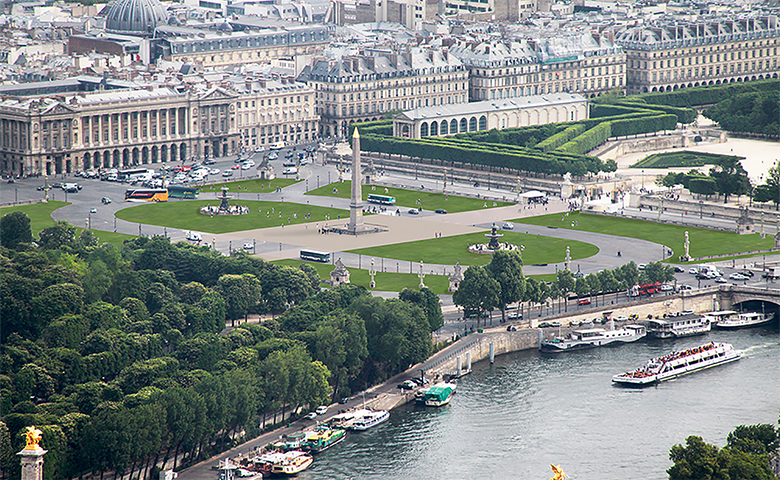
Paris public space does not anymore fill the inhabitants' needs (in term of usage and size) nor does it respond to climate change challenges the city faces. The vast majority of accessible open spaces are sealed. Mineral or sealed surfaces have a low capacity for absorbing rainwater; they also contribute to increased air and noise pollution, biodiversity loss and urban heat.
Our project is inspired by London parks which essential elements are large open lawns framed by planted alleyways. This simple typology creates broad flexibility in terms of use (walking, relaxing, picnic, running, temporary sports fields, events, etc.).
Lawn typology also plays a vital role for environment and ecology. In comparison to hard surfaces, lawn reduces urabn heat, filters and mitigates runoff water, purifies air from dust particles. Lawn absorbs CO2, assimilates it and releases oxygen. Lawn reduces noise reverberation. A rich species mix lawn increases biodiversity. Well drained, it dries quickly after rainfall for an increased usage.
Examples we're showing here illustrate ways to spread the lawn typology across Paris.
"A City’s Surface Reflects Its Inequities", by Akiva Blander in Metropolis Mag.
All images are © Djao-Rakitine, unless otherwise stated.